Ask two homeowners on the same street about their roof insurance claims, and you’ll often hear two completely different stories — even if they have similar damage and similar-aged roofs. That’s not random. Every insurance company runs the same basic play, but each one writes its own rules for how that play actually unfolds.
The Part That Never Changes
Strip away the paperwork and every homeowner’s insurance policy runs through the same three steps:
Every carrier in the country follows that same skeleton. It’s everything inside those three steps — how they calculate what “the policy allows” actually means — where things start to diverge.
The Part That Changes With Every Carrier
We’ve worked alongside enough insurance companies to know that no two handle a roof claim quite the same way. Some of the differences we run into most often:
- How they price the job. Most carriers run the damage through their own estimating software, which spits out what it considers the local “market rate” for materials and labor — whether or not that number matches what contractors in your area are actually charging.
- Whether they want multiple quotes. Some companies are satisfied with one detailed estimate. Others want two or three contractor quotes before they’ll move forward. Many providers do not even ask for quotes as they wish to dictate what to pay out in terms of getting the damage repaired
- Repair-first vs. replace-first. Some adjusters tend default to approving a repair and only escalate to a full replacement if the contractor can show the repair genuinely isn’t sufficient. Others are quicker to approve a full replacement outright.
- Whether loyalty factors in. Some carriers factor in how long you’ve been a customer when working through a claim. Others treat every policyholder identically regardless of tenure.
- How your policy is actually written. This is the big one, and it’s covered below — ACV and RCV policies can produce very different payouts for the exact same roof.
ACV vs. RCV: The Difference That Actually Changes Your Payout
Of everything on that list, this is the one worth understanding before you ever file a claim.
- ACV (Actual Cash Value) pays out what your roof is worth today — the replacement cost minus depreciation for its age and wear. A 15-year-old roof gets paid like a 15-year-old roof, not a new one.
- RCV (Replacement Cost Value) pays what it actually costs to install a brand-new roof at today’s prices. Most RCV policies still pay the ACV amount first, then release the remaining “recoverable depreciation” once the work is completed and you submit proof.
Same roof, same damage, same repair — but an ACV policy can leave you covering a real gap out of pocket, while an RCV policy is designed to eventually cover the full cost in two payments. Neither is automatically “better” — it depends on what you’re paying for — but you want to know which one you have before you’re standing in your driveway after a storm.
Why We Recommend Getting Three Opinions, Not One
Because every carrier writes its own rules, we generally walk homeowners through the same three-step approach before making any decisions:
- Start with your agent. Have them spell out exactly what your policy covers — ACV or RCV, your deductible, and any depreciation schedule tied to your roof’s age.
- Get the adjuster’s initial verdict. This is the insurance company’s read on the damage and what they’re prepared to cover.
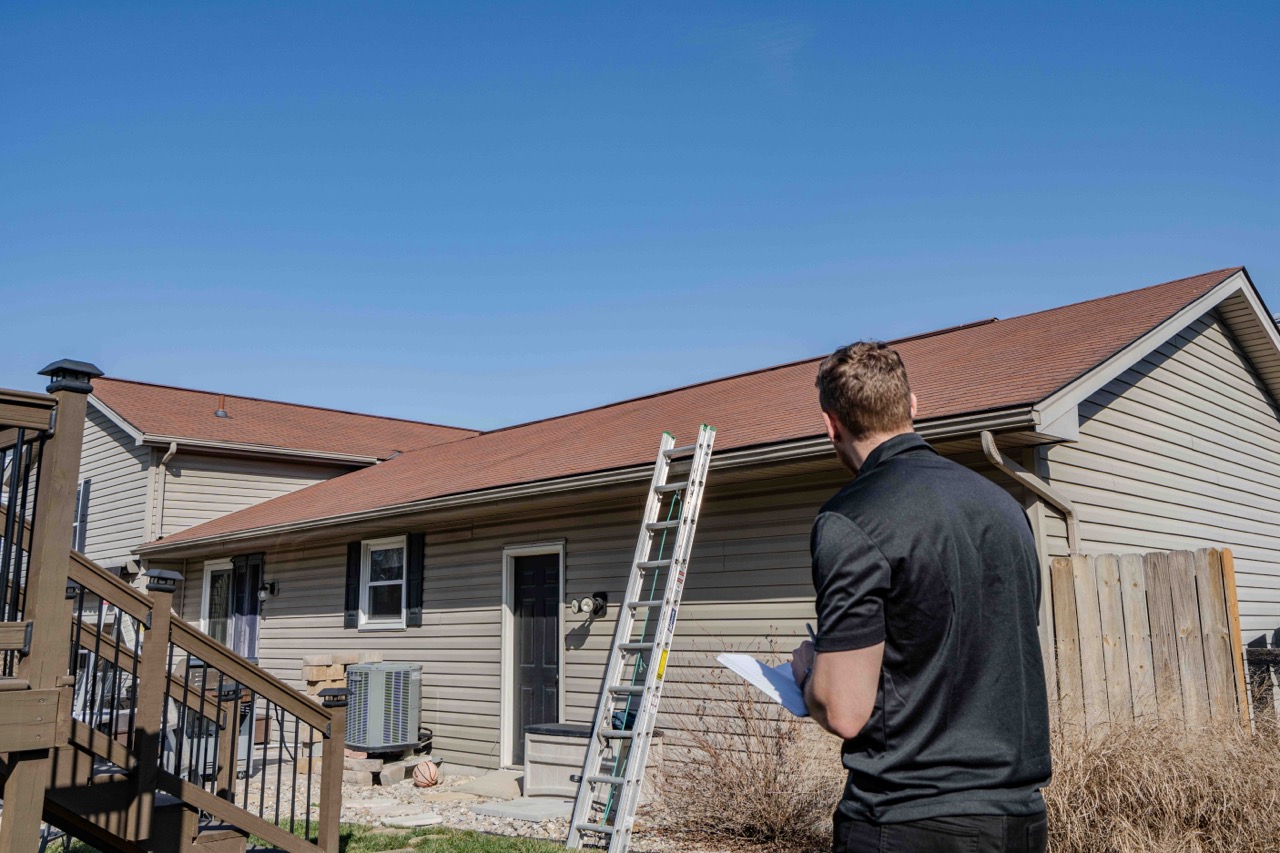
- Bring in a roofing contractor for an independent opinion. A second, non-insurance set of eyes on the actual damage — someone who can tell you honestly whether the adjuster’s scope matches what your roof really needs.
We’re not storm chasers, and we won’t tell you to open a claim you don’t need. But if your claim is legitimate, we’ve guided plenty of neighbors through this exact process — consulting honestly, laying out every option, and helping you understand what your specific policy actually promises you before you sign off on anything.